


Although actually I should say salt evaporation ponds; technically salt pans are natural expanses of ground covered with salt and minerals whereas what we and many waders spend much of our respective lives in are a series of artificial shallow ponds, separated by levees, created to extract salt from the sea. Salt pans flows off the tongue better though than salt evaporation ponds! You can discover more on Portuguese salterns (another word for salt making areas) in ‘Portugal’s White Gold‘, a post I wrote a few years ago.


Some of you might be wondering why we spend much of our time here, well quite simply it is because these areas are a great habitat for migrating and wintering waders. If you enjoy birding as much as we do, and are prepared to walk cautiously so not to disturb them then these areas are a fabulous place to while away an hour or two, or even three as we did yesterday in ponds a few miles away.

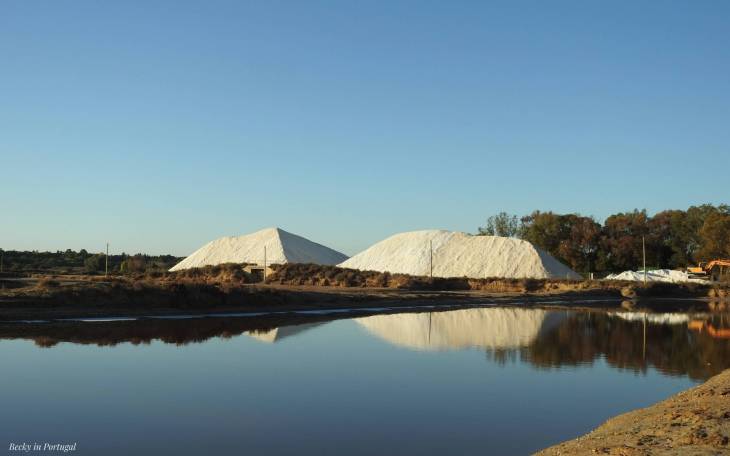
Usually though we spend our time in the ones within a stone’s throw of our apartment, hence the multiple posts. Here’s just a tiny selection of ones I have written over the years, followed by a few images I have taken over the past couple of days.
- A Place to Roost – sunset views and tips for exploring the ponds
- Evening Reflections in the Salterns – a closer look and listen at some of the waders
- Birding in the Right Place – birding list from a half day session
- Impact of disturbed and lost habitats – a plea to walkers, tourists and developers
- Made by the Sea – a close up of salt
- A Spotlight on Waders – exactly what the title says!


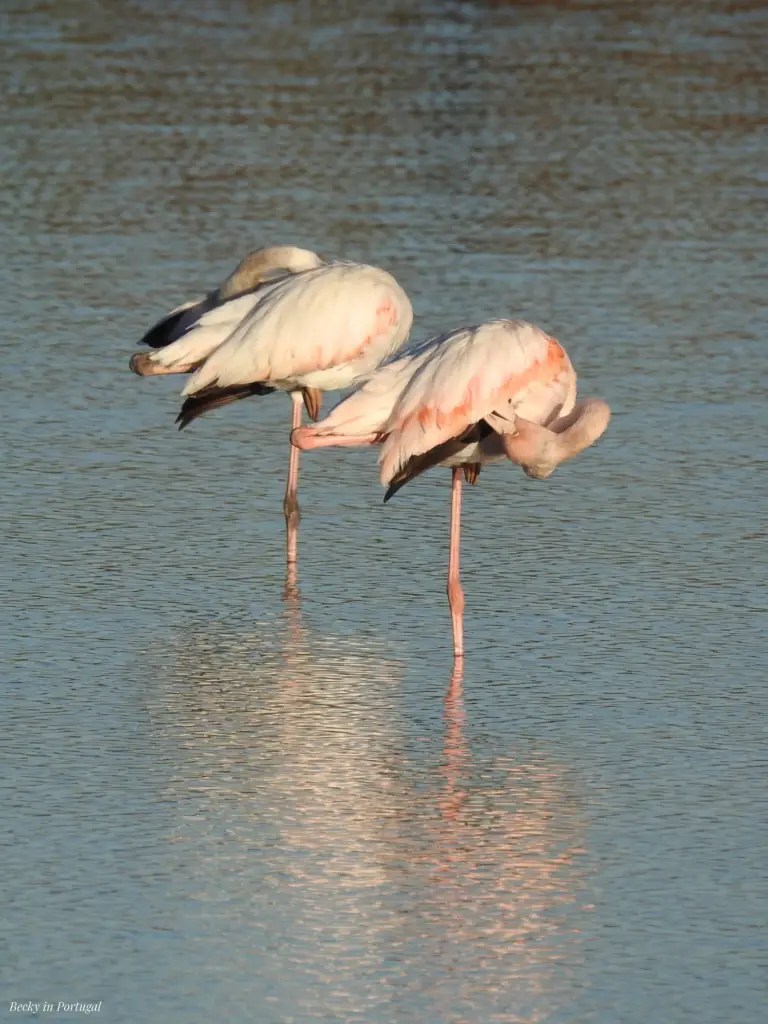


It is not just the birds that are forever changing, so are the ponds themselves. Seawater is fed into outer ponds, and then gradually through a series of culverts and levees released into smaller ponds to enable natural evaporation and a steady increase in the salinity of the water. We’ve never been here in the summer when the area has been in full production, but we have still observed the changing colours of some of the ponds. These colours indicate the salinity, as the microorganisims (algae) within the water change as do their hues depending how salty the water is. Low to medium salinity will be green, whereas mid to high salinity will be pink, red and/or orange.

And of course then there is the Algarvian light. No wonder I never stop photographing when strolling around the ponds. There are numerous salterns along the coastline of the east Algarve, most though are inaccessible to the general public for reasons of health and safety. We are therefore very fortunate to have accessible ones on our doorstep.