


Following on from ‘at first glance‘ I thought I’d take a closer look at some waders, afterall they don’t always look like they do in the books. Every bird is different, they could be in the intermediate stage of their breeding plumage change and even bright sunlight or cloud cover can affect their appearance. As can cold days or the presence of predators when birds might fluff up to stay warm or to look bigger, they may even stretch their necks out. No wonder we enjoy birding, it’s always a fascinating challenge. Let’s start with a few waders in the saltpans, from a distance you might not even notice them at first glance, but if you look more closely.


And once you zoom in ever closer you begin to realise there are a range of different species, and not just the first two or three you spotted. Always remembering of course to let the binoculars or camera to do the zooming, and not your physical self. A flock of wading birds can take flight from the appearance of a human a mile away, particularly if the human moves suddenly or stands too long in the same place without camouflage.


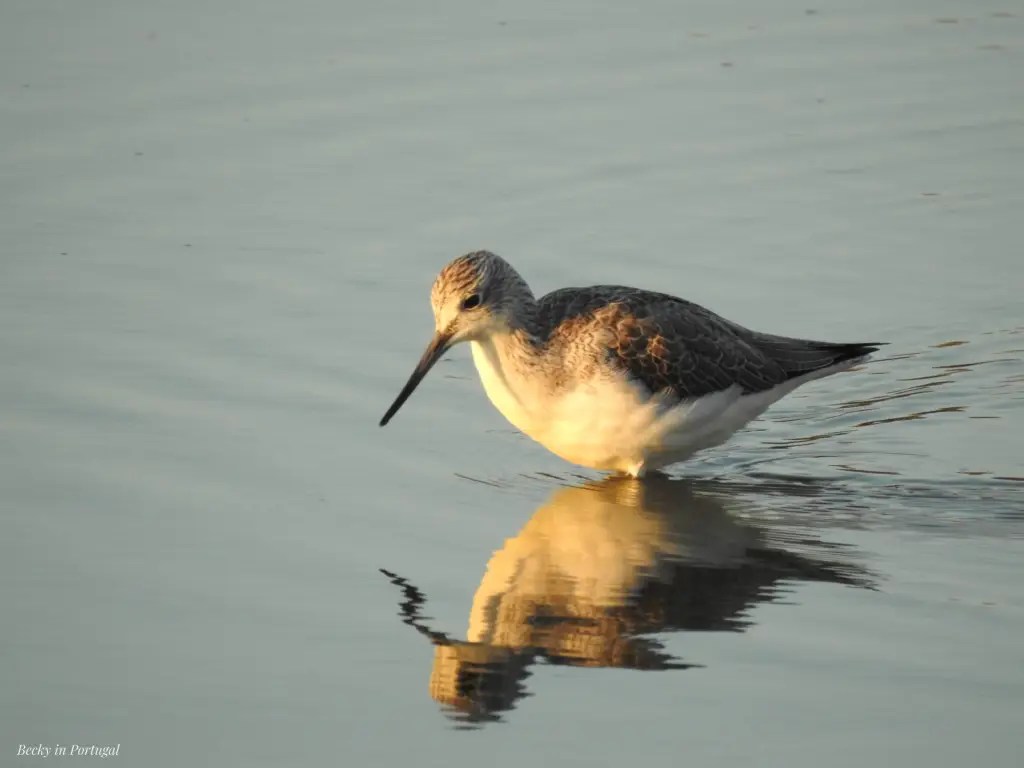

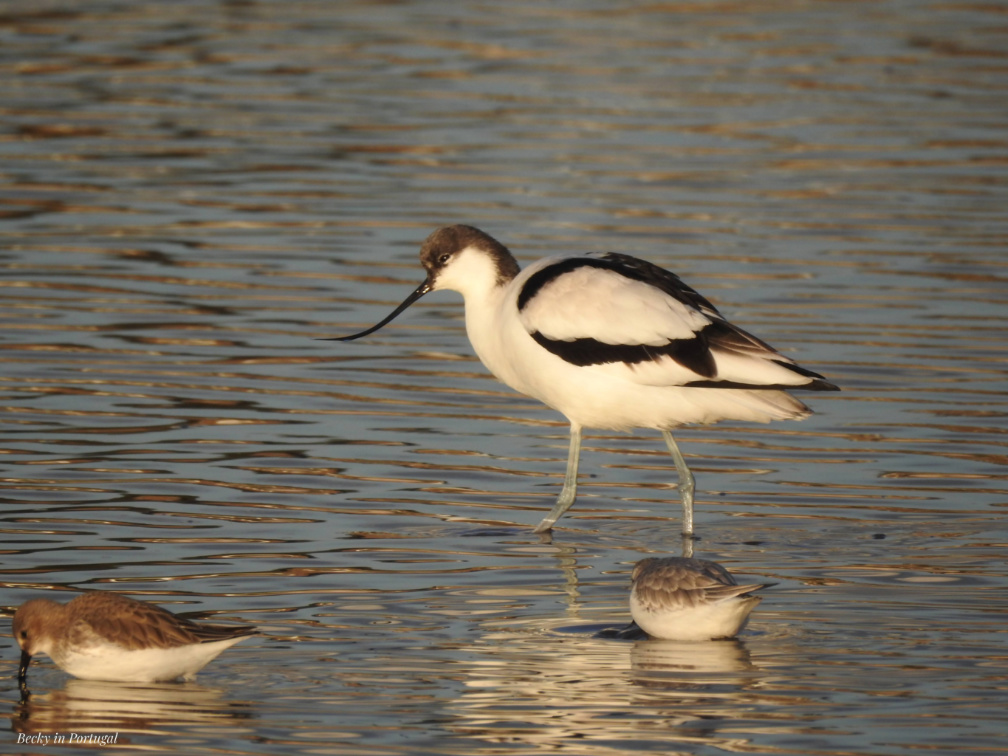
(If you haven’t already do click on each gallery for identification and other notes.)
It always helps, particularly for the smaller waders when in winter plumage, if they are photographed with other waders. The chance to compare sizes, shape and even the beak can all help with identification. Location can also make a huge difference. Just compare these four photographs of sanderlings. Unmistakable on the beach, possibly less obvious elsewhere.


Some waders however can be a bit more challenging, especially the dunlins. Some I will recognise straight off, others however look completely different. They seem to have such a range in plumage and beak size depending on the light, the season and just because!


Of course some waders have such a distinctive plumage and shape they are easily identified once you have been told their name.

Others though which many think are easily recognised in the Ria Formosa such as the curlew are not as easy as they would suggest. The reason is that there is another bird – whimbrel – which looks very similar. In 2016 I shared a detailed post comparing the two, titled ‘We’re often confused‘! Both the photographs below are of the Whimbrel.


If you are wondering what the whimbrel has caught in the second shot, it is probably a crab. The mudflats and banks of the rivers at low tide are often a moving mass of fiddler crabs, specially on a warm day. You can read more about them here, or just take a look at the images below. They are another great reason to walk slowly and carefully when exploring the Ria Formosa. You never know what nature you might see!